


AI Meets Shoppable Content: The New Face of E-Commerce
- Sep 5, 2025
- 6 min read
By Monkey Studio | Creative Community | September 2025
The convergence of artificial intelligence and shoppable content is fundamentally reshaping the e-commerce landscape, creating unprecedented opportunities for businesses to connect with customers at the moment of inspiration. This revolutionary approach transforms traditional static content into interactive, purchasable experiences while leveraging AI to optimize discovery and conversions.
The Shoppable Content Revolution
What is Shoppable Content?
Shoppable content represents any digital media—images, videos, social posts, or blogs—that allows customers to purchase directly from the content itself. This seamless integration eliminates the traditional friction between discovery and purchase, reducing the customer journey from multiple clicks to a single interaction.
The impact is substantial. Traditional content forces customers through a complex path: viewing content, clicking links, searching for products, and navigating to product pages. Shoppable content streamlines this to a direct tap-to-purchase experience, reducing abandonment and increasing conversion rates.
Performance Metrics That Matter
The results speak volumes about shoppable content's effectiveness. A leading fashion retailer experienced a 308% increase in conversion rates after implementing shoppable content on their platform. Meanwhile, a luxury department store saw an immediate 64% revenue lift from their weekly shoppable look book program.
Interactive content engagement significantly outperforms static alternatives, with customers spending 13 minutes with interactive content compared to just 8.5 minutes with traditional static content—representing over 50% more engagement. Additionally, 88% of businesses report improved online sales after implementing interactive video strategies.
AI's Role in Modern E-Commerce SEO
The AI-Powered Transformation
Artificial intelligence has evolved from a supporting role to becoming the central engine of modern SEO strategy. 92% of businesses already use generative AI to enhance their e-commerce experiences for more powerful personalization. This shift represents a fundamental change from keyword-focused optimization to intent-driven, personalized experiences.
AI impacts SEO through several key areas:
Predictive Search Intent Modelling: Modern AI systems analyse user behaviour patterns to predict search intent before query completion, delivering hyper-specific results in real-time
Real-time SERP Analysis: AI tools now monitor thousands of keywords simultaneously across various devices and locations, adapting strategies instantly to algorithm changes
Content Optimization: AI automates complex SEO tasks, with 17% of marketers saving over 10 hours weekly using AI tools for SEO optimization
Search Algorithm Evolution
Google's AI-driven updates demonstrate the platform's commitment to intelligent search experiences. The company conducted over 13,280 live traffic experiments and nearly 895,000 search quality tests in 2023, showcasing their dedication to AI refinement.
However, this evolution comes with challenges. When AI Overviews appear, organic clicks drop by as much as 64%, and the top organic position sees its click-through rate fall from 24.7% to just 15.8%. This shift necessitates new optimization strategies that consider AI-generated summaries and interactive elements.
The Convergence: AI-Optimized Shoppable Content
Enhanced Personalization Through AI
The marriage of AI and shoppable content creates unprecedented personalization opportunities. 45% of millennials and Gen Z desire personalized product recommendations when shopping online, and AI-powered shoppable content delivers exactly that experience.
AI enables:
Dynamic Product Matching: Visual search technology allows customers to upload photos and instantly discover similar products, with 70% of Gen Z using YouTube for product discovery
Behavioural Prediction: AI analyses customer behaviour to suggest products before customers even know they want them, creating anticipatory shopping experiences
Real-time Content Optimization: Machine learning algorithms continuously refine shoppable content based on performance data, improving conversion rates over time
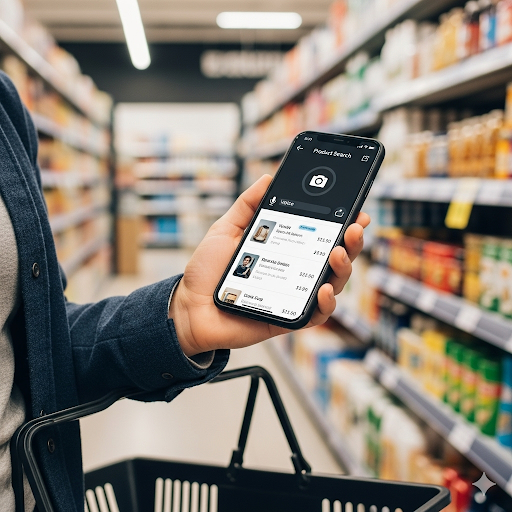
Voice and Visual Search Integration
Conversational commerce is experiencing explosive growth, with consumers increasingly shopping through voice and text interactions via smart assistants and embedded AI chat systems. This trend removes friction from discovery and purchasing, creating more accessible shopping experiences.
Visual search capabilities are particularly transformative for fashion and home décor brands, where customers can photograph desired items and instantly find similar products. This technology shortens the path to purchase and reduces cart abandonment rates significantly.

Social Commerce Statistics and Trends
Market Growth Projections
The social commerce market is experiencing unprecedented growth, with global sales projected to reach $1.2 trillion by 2025. In the United States alone, social commerce sales are expected to hit $85.58 billion in 2025, marking a 19.5% increase from the previous year.
Platform Performance
Different platforms show varying levels of effectiveness:
Facebook: Expected to attract 69.4 million U.S. shoppers in 2025
Instagram: Projected 47.5 million shoppers, with 35% of all Instagram users making purchases on the platform in 2023
TikTok: Anticipated 37.8 million shoppers, with 37% of TikTok users purchasing through the platform
Demographic Insights
Millennials are expected to represent 33% of global social commerce spending by 2025, making them the largest demographic in this market. 73% of consumers aged 18-34 have purchased something via social media channels, significantly higher than older demographics.
SEO Optimization Strategies for Shoppable Content
Technical Implementation
Successful shoppable content requires robust technical SEO foundations:
Site Architecture: Clean, intuitive site structures with clearly organized category pages and subcategories improve both user experience and SEO performance. This supports link authority distribution to key product pages, improving ranking potential.
Mobile-First Design: With 72.9% of retail e-commerce generated via mobile devices, responsive design is critical. Google's mobile-first indexing prioritizes sites that function seamlessly across devices.
Page Speed Optimization: Fast loading times are essential for both SEO rankings and user experience. Compressed images, caching, and Content Delivery Networks (CDNs) significantly improve performance.
Content Optimization Tactics
Modern AI SEO tools provide sophisticated content optimization capabilities:
Keyword Research Enhancement: AI tools like ChatGPT can recommend SEO-relevant keywords and explain their strategic value, though human validation remains essential shopify
Content Auditing: AI-powered audits scan thousands of pages automatically, identifying underperforming content and optimization opportunities
Real-time Optimization: Tools like Clearscope and MarketMuse provide real-time content scoring and keyword suggestions as content is created
Measuring Success and ROI
Successful shoppable content measurement requires tracking multiple metrics:
Conversion Metrics: Direct sales conversion rates measure immediate financial impact, while Customer Lifetime Value (CLV) reveals long-term value of acquired customers.
Engagement Analytics: Click-through rates, time spent on content, and social shares provide insights into content resonance and brand loyalty potential.
Attribution Modeling: Comprehensive tracking across multiple touchpoints helps accurately allocate credit and resources to the most effective shoppable content strategies.
Industry Benchmarks
Industry conversion rates vary significantly by sector:
Gifts: 4.9%
Apparel and footwear: 4.2%
Jewellery and cosmetics: 2.9%
Consumer electronics: 1.4%
Understanding these benchmarks helps set realistic expectations and identify optimization opportunities.

Future Trends and Predictions
The future of shoppable content will be shaped by several technological advances:
Augmented Reality Integration: AR technology enables virtual try-ons for beauty and apparel brands, with companies like L'Oreal partnering with Meta to bring virtual try-ons to Instagram.
AI Twins: Virtual versions of customers that understand body shape, size, and preferences will enable personalized product trials before purchase.
Sustainability Integration: AI will power circular shopping models, helping customers make environmentally conscious choices while supporting rental, resale, and repair options.
Voice Commerce Evolution: Conversational commerce will continue expanding, with AI-powered assistants handling end-to-end engagement from discovery to post-sale support.
Implementation Recommendations
For businesses looking to implement AI-optimized shoppable content:
Start Small: Begin with lightweight interactive elements like polls or product finders before investing in complex configurations.
Focus on Mobile: Prioritize mobile-first design with simple interactions like taps and swipes that work effectively on smaller screens.
Leverage User-Generated Content: Repurpose customer-created images and videos as shoppable content, as 88% of consumers find user-generated content more trustworthy than brand-created content.
Invest in Analytics: Implement comprehensive tracking systems to measure engagement, conversion rates, and customer lifetime value across all shoppable content initiatives.
Continuous Optimization: Use AI-powered tools for ongoing content audits and real-time optimization based on performance data
Final Thoughts
AI-optimized shoppable content isn’t just a trend—it’s the new face of e-commerce. The next era of retail belongs to businesses that can seamlessly merge storytelling with transaction, powered by intelligent personalization and frictionless shopping. As voice, visual, and AR-driven experiences continue to evolve, customer expectations will center on instant discovery and purchase. The brands that embrace this transformation now will define the future of digital commerce, turning every piece of content into a dynamic storefront.
At Monkey Studio, we help brands thrive on Instagram by blending creator-led storytelling, UGC, and trend-driven strategies. From Reels to carousels, we craft content that clicks — authentic, engaging, and built for impact.
📩 Contact us at team@monkeystudio.in to start building your Instagram strategy for 2025.


Comments